
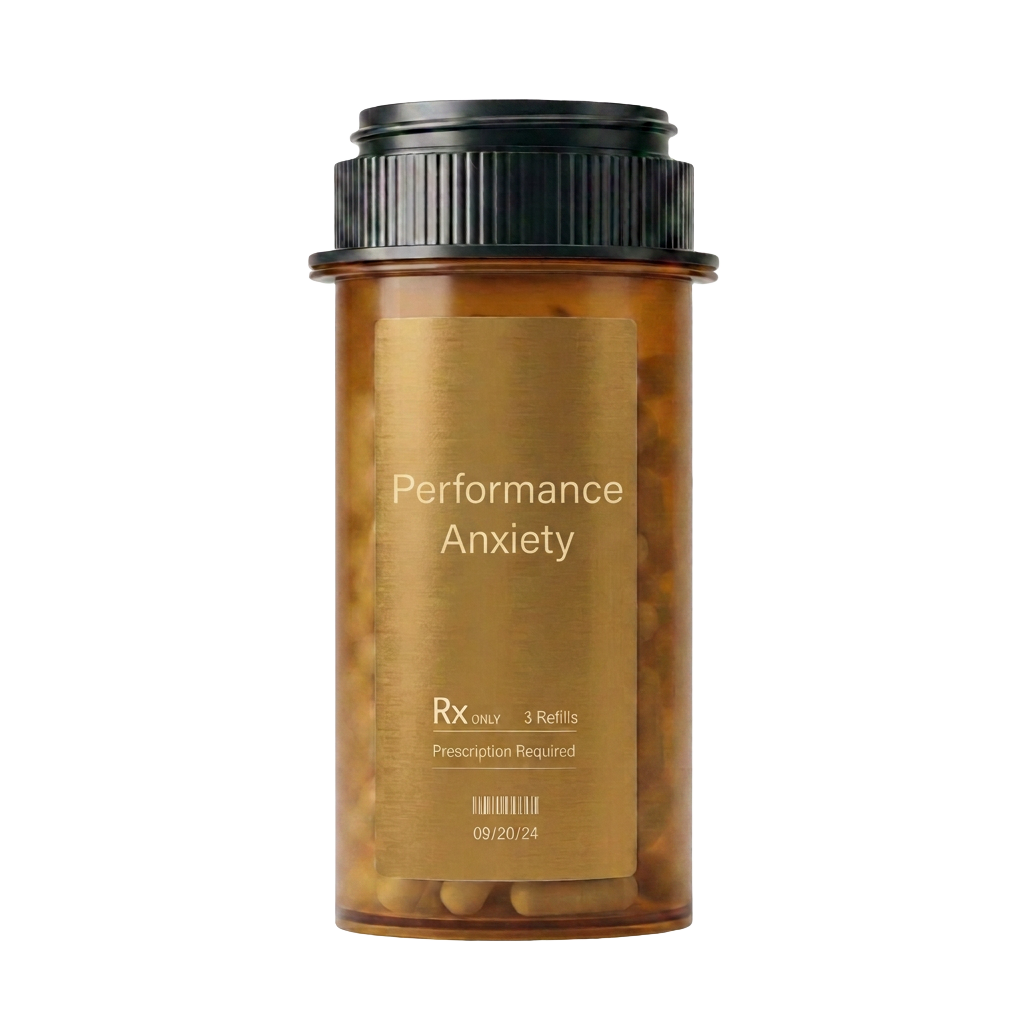
Performance Anxiety
As-needed treatment for situational performance anxiety.
Propranolol
Propranolol is a non-selective beta blocker prescribed off-label for situational performance anxiety. It blocks the physical effects of adrenaline, so the racing heart, trembling hands, and shaking voice that surface before a presentation, negotiation, audition, or exam are blunted. It does not sedate you or alter your thinking; it quiets the body so your preparation shows. Taken as needed, typically 30 to 60 minutes before the event, under physician review.

As-needed treatment for situational performance anxiety.
Questions about Performance Anxiety.
What is Propranolol?
Propranolol is an oral tablet, prescription medicine that is FDA approved for high blood pressure, certain heart rhythm conditions, migraine prevention, and essential tremor. It is widely prescribed off-label for situational performance anxiety.
How does Propranolol work for performance anxiety?
Propranolol blocks beta-adrenergic receptors, which are the receptors adrenaline acts on. Anxiety before a high-stakes event triggers an adrenaline surge that produces a rapid heartbeat, tremor, sweating, and a shaking voice. By blocking those receptors, Propranolol reduces those physical symptoms. It does not act on the brain the way benzodiazepines do; it is not sedating and is not habit-forming.
What can I expect with Propranolol treatment?
Most people notice a steadier heartbeat and steadier hands within 30 to 60 minutes of a dose, with the effect lasting roughly three to four hours. You remain fully alert and clear-headed. Propranolol is generally taken only as needed before a specific event rather than daily, though your physician may recommend a different schedule based on your history.
How to take Propranolol?
Propranolol is taken by mouth, typically 30 to 60 minutes before the event that triggers symptoms. Your physician will set your dose and will usually recommend a trial dose on a low-stakes day so you know how you respond before relying on it. Do not exceed the prescribed dose or frequency, and do not stop a daily regimen abruptly without speaking to your physician.
What are the possible side effects of Propranolol?
Common side effects include tiredness, lightheadedness, cold hands and feet, slower heart rate, and mild nausea. Less common effects include vivid dreams, low blood pressure on standing, and shortness of breath. Propranolol is not appropriate for everyone; tell your physician if you have asthma or other airway disease, a very slow heart rate, certain heart block conditions, diabetes, or if you are pregnant or nursing.
What should I do if I miss a dose of Propranolol?
If you take Propranolol only as needed, there is no missed dose to make up; simply take it before the next event as directed. If your physician prescribed a daily schedule, take the missed dose as soon as you remember unless your next dose is near, in which case skip it. Do not double up.